
WRITING YOUR FIRST NOVEL
What’s it like to write your first novel?
- Fun
- Grueling
- Challenging, especially keeping an accurate timeline in a historical novel
- Time-consuming
- Rewarding
- Discouraging
- Learning
Finding Your Story
Whether writing fiction or non-fiction, you have to identify the story you want to tell.
I’ve always been fascinated by my father’s family’s escape from Ukraine in 1929. “Grosspa” (Grandfather) was a pastor/farmer. Some of his church leaders learned he was on a list for deportation to Siberia. They warned him to leave the village that night.
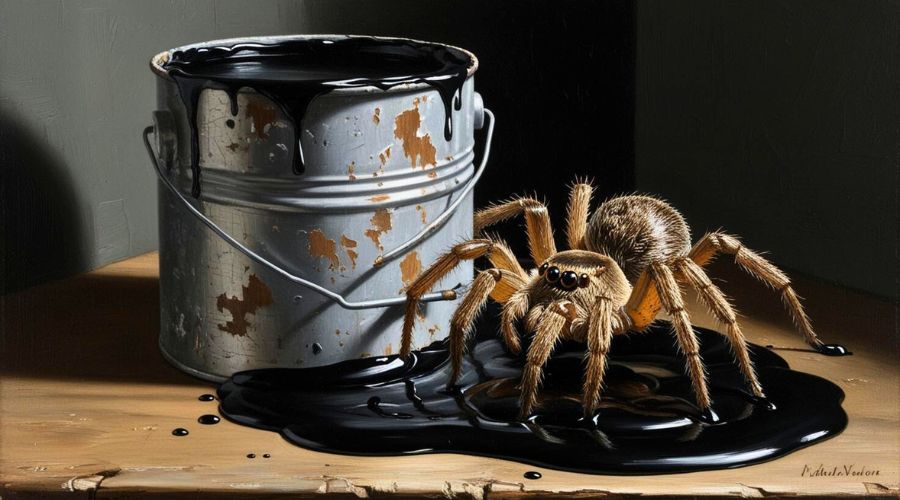
Dad didn’t talk too much about his early life in Ukraine, but did tell us is that, as children, he and his brothers would coat a stick with tar and capture black widow spiders. I’m really not sure what they did with the spiders after catching them! Not my idea of fun, but to each his own.
Bandit Nestor Makhno
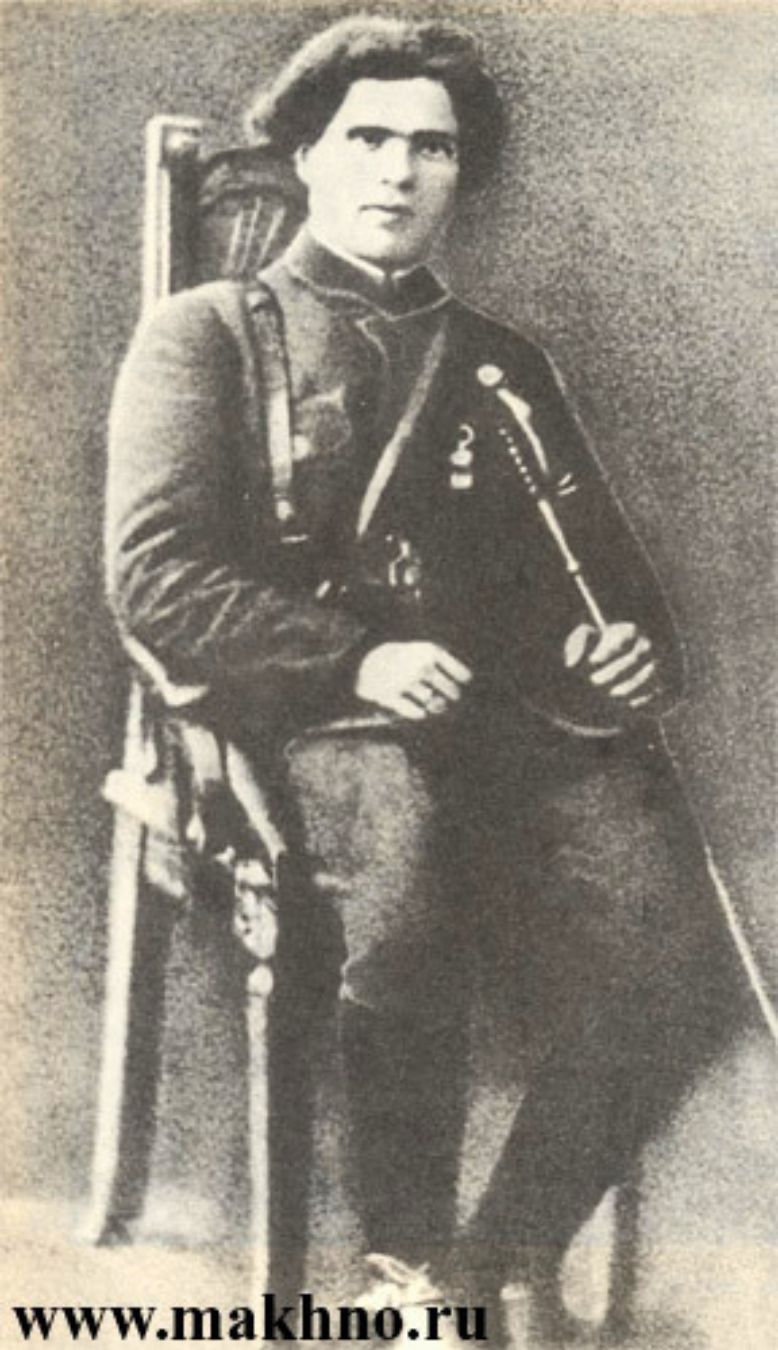
Even though Dad was only three when the bandit Makhno terrorized the Mennonites, he remembered, either from his memory or stories he was told. During the Bolshevik Revolution (March 8, 1917-June 16, 1923), Red and White armies were often billeted in local homes. The fighting went back and forth, with Reds winning one day, Whites the next. Makhno, a despicable man, led a third army of up to 300,000 rabble-rousers, particularly in 1920 and 1921.
Makhno attacked Mennonite villages (my background), where he and his followers raped, plundered and murdered, destroying entire villages. Few men were left alive.
Others, like one woman in my novel, were left to raise children on their own, near starvation. I don’t know how these women didn’t lose their minds after what they experienced. But they continued, caring for their remaining family members.
Why Mennonites Went to Ukraine
I’m neither Ukrainian nor Russian. I’m German-Dutch. But in 1763, Catherine the Great invited German families, many from Prussia, to settle Ukraine, which was new territory for her. She offered religious freedom, land grants, and exemption from military service, critical for the Mennonites’ pacifist beliefs. Since religious persecution was increasing in Prussia, many Mennonites, including my ancestors, accepted the Empress’s offer.
Mennonites developed a number of successful colonies including Chortitza (my father’s area) and Molotschna (Don’s family) in the southeastern region of Ukraine, in what is now the Zaporizhzhia Oblast (current spelling). Both colonies were built by rivers, Molotschna along the Molchnaya River, Chortitza along the Dnieper River, which Mom and I traveled in 2006—but more of that later.
From Self-Governed to Instability and Threats
For about a century, Mennonite colonies were self-governed. They were free to speak German rather than Russian. They operated their own schools, opened hospitals, and contributed to the region’s agricultural economy through their excellent farming methods, as well as some industry.
But World War I and the Russian Revolution led to instability and threats to these communities. Religious freedom was actively suppressed by the new state atheism. Clergy were imprisoned, deported, or executed.
(For more, see “Ukraine: rich history, vibrant witness,” Anabaptist World)
Policies like collectivization and, later, Stalin’s Holodomor (forced starvation), caused immense hardship and loss of life. Many Mennonites were deported to Siberia or executed.
This is the inspiration for my historical novel. When Dad’s family escaped, my aunt left a fiancé behind. Would she ever see him again?
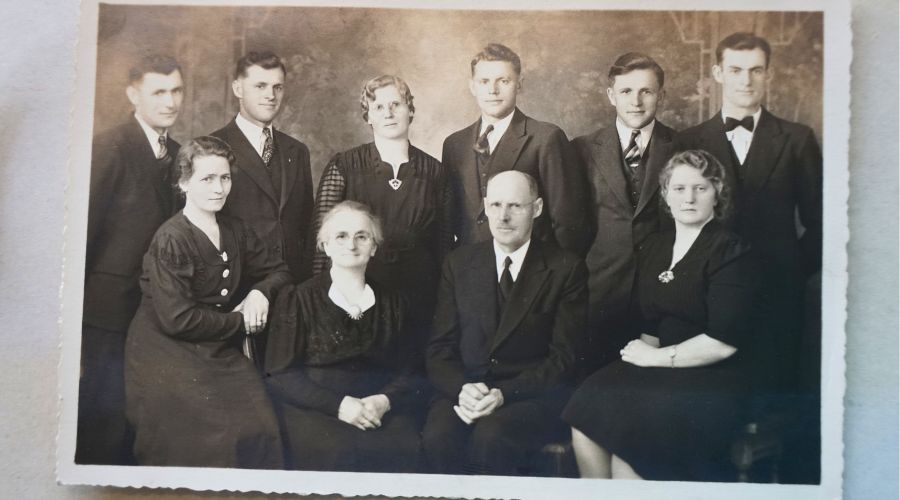
Dad’s family several years after escaping to Canada. My father is second from left.
I’ll write more in my next post. You can read more about the more recent Ukraine situation in my article, “Ukraine Trauma Continues.”
Question of the week:
Many of our ancestors have immigrated from another country. From where did yours emigrate? Let me know in the comments.
Thank you for sharing this difficult story.
Thank you Laura. It’s been a challenge and a joy, and sometimes hard to write of the inhumanity.
Same family history as yours, Carol. Mom was from Chortitza and Dad from Molochna. So anxious to read your novel.
What year did your Mom and Dad leave Chortitza and Molotschna respectively?
Such sad unimaginable history. I thank you for sharing to enrich our knowledge of the past. I truly look forward to reading your book
I so appreciate your comment, Pamela.
I’m so glad you are writing this story, Carol. It’s important to remember these events.
On my mom’s side, my ancestors immigrated from Italy, right before the 1906 earthquake. I’m a fourth-gen immigrant on Mom’s side, and a first on my British side.
It is important, even in light of current events. How interesting that you’re a fourth-gen Italian immigrant on your Mother’s side and a first on your British side. There have to be stories there for you to mine!
Thank you so much for sharing this poignant story. When and where can I get your book?
Love you, Joyce
Ah, thank you dear friend. I’ll be sure to let you know when it’s available.
Hi, Carol. I never heard my parents or grandparents story. How did you learn all this? We were never close to my grandparents. You and I are related through our Mom’s side? Grandma (Buerkert) Hiebert? I dont know where any of them came from, except later, Canada.
I love your story! Very interesting! Love you!
Nancy, I’m sorry you don’t know more about our history. Yes, we are related through the Bueckert/Hiebert side. I have the blessing of three autobiographies–my Dad, Uncle, and Grandfather. And I’ve read a good deal and researched what happened to the Mennonites in that very difficult time period. But we also heard some stories from Dad as we grew up, had a family reunion where the five brothers and one sister talked about their childhood and move to Canada, so this history has always seemed a part of my life. Love you back!
Carol, Thank you for sharing your family’s difficult horrific challenges to survive as a family. I love how you create an appetite for your readers. I already want you know what happened, how & when.
Thank you Pamela. I look forward to sharing more and really appreciate your comment that I’m creating an appetite for my readers! God was faithful throughout, and that’s the key story behind, in and through the story.
Aaron Kelley emigrated from County Kildare, Ireland in the mid-1700s well before the potato famine.. The Thatcher branch emigrated from Uffington, Oxfordshire, England in the 1600s. I’m not sure they were escaping anything. I can imagine Aaron Kelley may have been Protestant living among Catholics, and wanted to go somewhere where there was a less oppressive cultural atmosphere. Knowing the pioneering spirit among my more recent Thatcher ancestry, I imagine them being drawn to the new and the wild and the freedom of building a new life in America. My great great grandparents came from the east in the great westward movement of the mid- to late- 1800s and landed in Shasta County, California.
My great great grandfather’s bio is in the attached website.
Thank you Dave. What an interesting history you have as well. I enjoyed reading your great great grandfather’s bio and appreciate your sending it to me. Very cool that he was a pioneer in Shasta County.
I look forward to reading this novel. My grandparents left Russia in the 1880s, so their story isn’t as terrifying, but nonetheless it is a story of leaving everything behind and coming to a new land. If you would ever like to read my grandfather’s story, or the letters he wrote to relatives during the starvation in the 1920s, let me know. The letters may help you round out the suffering of those left behind. Thanks for your courage to write an account like this.
Thank you Ina. Don’s family, and my mother’s, both left Ukraine in the 1874 time period. A huge change either way, with a new beginning in a new country, language, culture. I’d appreciate reading some of the letters he wrote to relatives during the starvation of the 1920’s – and then there was Stalin’s Holodomer, which killed a great number of people in 1929-32 time frame. Yes, I’m interested. Thank you.
So interesting Carol. My family story (on my mother’s side) is your family story. My grandfather and at least one brother escaped under very difficult circumstances. I believe they came from Molotschna too. I have the basic outline of their experiences, but not many details/years etc. so it’s great to read what you have managed to learn. One thing that always stuck with me is my great uncle telling a bit of his story to my family when he was an old man. He had never talked about it before, not even to his immediate family, because he had such great fear all of his life of being sent back to Russia. Ourpeople went through so much.
Thank you Judy. Yes, so many of our families went through similar challenges, and I can appreciate your great uncle’s fear of being sent back to Russia. I’m so glad he was able and willing to share some of the story with you in his older years. I appreciate your sharing that. Hugs!